Powered By Blogger

Wednesday, 15 December 2010

American vs Japanese

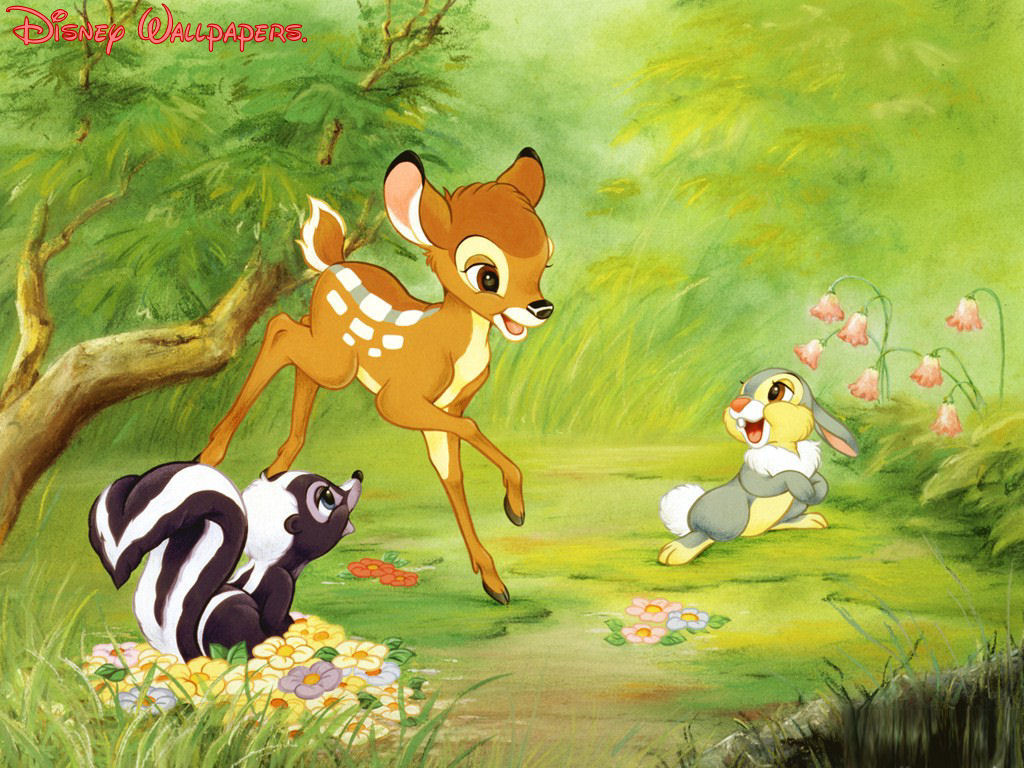
Well, didn't really get much from this lecture, the notes were slacking as there was many videos causing a distraction, but what i did take from the lecture was how Disney differs from animie or manga. The main thing i noticed in Disney was how everything in the whole film centred around its characters, For example like in Bambi, the characters, the forest are all based around the main character. This differs in a Japanese film we were shown called my neighbour toroto. this had a completely different layout compared to the American Disney films with scenery spreading the whole of the scene rather than enclosing the characters. the only link i could make between the two is how they use similar drawing styles in the way that they outline they're work, other than that, there's not an awful lot else to say.

Art ani vs Comcertial ani

Right then, initially, whats better? or is that the right take? in the lecture we were showed a clip of fantasmagorie, originally a 2d based animation that has now had 3D added to it, it shows the contrast between movement, bill explained in the lecture that its not always the quality of the key drawings but its what happens in between them is whats important, further going on to say that the ultimate thing that defines the two typed of animation (2D/3D) is how easily that's done, for example, a 2D artist is pretty much god to the page and his pencil where as with 3D the are calculations that need to be made that cant always create the same free art work that 2D artists can.

http://www.indavideo.hu/video/Fantasmagorie_2008

A good example of this is the movment shown in the Fleicher brothers adaptation of snow white with Betty boop. where the story line falls down the character animation and movement brings it right back up to life.

http://www.youtube.com/watch?v=CNG8GYrh1mg

Another version of this is Disney's take on snow white where the same movement isn't shown but the storyline in significantly better.

http://www.youtube.com/watch?v=8gWiVs5Q0kc

basically to round it up i currently think that 2D artists with they're originally animation talent have the upper hand on the movement side of things but i think it wont be long before 3D catches up and more importantly loosens up

Violence

Ok, excellent lecture, kicking it off with a complimation of video game head shots, booooomm, smashh, splaatt, blood everywhere bla bla bla, you know the rest. but everyone loved it, the whole room was cheering and laughing at virtual people getting they're heads blown off, but why? Such graphical violence is a terribly thing to watch happen, or is it? Is it the difference between winning and loosing, the satisfaction of the opposition failing and the other other prevailing with such skill? There a many answers to the question but i think mainly its down to the fact that no one is bothered by this kind of thing anymore, everyone's so acclimatized to death these days a few head shots mean nothing.
 http://www.youtube.com/watch?v=odsCfqywDSk

 
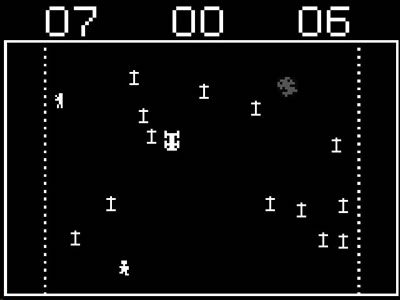
But has it always been this was? Has violence just turned up? I'm afraid not, an example of this was a 1976 game called death race which shocked society with the thought of people running each other over, since then it has become a growing and more acclimatized subject, progressing onto games like doom, causing great controversy as it was the hole grail figuratively speaking to one of the Columbine killer teens. 


So who's to blame, script writers, directors, game developers, actors? or our self's? I think its consumerism, i think it most defiantly followed the lines of " the customers always right, even if they're wrong".

Wooooo?! Scii - Fii

Science fiction, possibly one of the genres.. everrrrrrrr, is one opinion i could agree with. With science fiction begin a genre that follows trends of out of this world that cannot usually be replicated it falls into the realm of fx in all areas let it be 3D or special.

Not to shame or put a downer on sci fi there its one trait that currently lacks originality. Most films in this genre usually follow the story lines of alien invasions, the end of the world, machines taking over. This is where i refere to intertexturality as these films all follow similar story lines, from the undead in resident evil taking over the world to ridley scotts aliens doing the same.

Yet however much everyone thinks that films are just always ripping each other off we still go to see them because is someway or another we still want to go see those aliens and crazy effects for the thrill of seeing some out of this world screen action.

New media

So euhhh, new media? pretty much does what is say on the tin really.


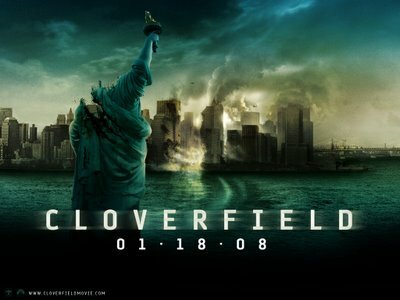
 To begin touching on the subject Bill showed us a a film about a fireman, looked pretty historic to say the least, but followed the trend of view points. It was a bit odd to begin with as it started off like any normal narrative with the fireman bursting in, saving who ever, leaving, then it replayed the whole story from the start from another point of view, rather than picking up the story seamlessly but from a different view. It kind of threw me back to films like "blur witch" and a more modern, new media film, "Cloverfield". Initially i personally found it interesting because of the view as its not one that's commonly used however it feels somewhat restricted as you don't always get the full picture. 


Where the point of view technique is more commonly used is in games. Transforming from games like pacman with the Ariel view to games like call of duty, halo, half life and so on with the first person view. 


So the question really is, Does the effect of techniques like point of view in film or games really effect quality and how interesting new media is? or is it more down to realistic qualities or other modern attributes?


Personally i think that the majority of things are judged on the enjoyment gotten out of a subject, how much of a thrill you get from watching a film or how addicted you get to a game can be deiced by any technique or device used, i don't think it really is anything in particular, i think its more down to what works best with the subject or theme of what you are trying to create.

Tuesday, 14 December 2010

Structuralism is what?!

okk so i was pretty mythd at this to begin with but il try to convey what i managed to take in.

Basically i came to the conclusion that structuralism is what we make of a subject/thin. The term first brought about by Claude Levi Stance it is how we make meaning and gain an understanding of a thing.

Another term linked to structuralism is binary opposition. This is quite simply the difference between the obvious, for example:

  • Good and Dad
  • Light and Dark
  • Win and Loose
  • Male and Female
  • Hot and Cold

Ok. now getting somewhere, but is that it? 1 or 2, A or Z, what about the bit in between? Commonly known as the grey area, simply because not everything falls between one or the other but on the middle instead.

Tuesday, 9 November 2010

Intertextuality

Intertextuality, not really a word that crops up in most everyday conversations, yet it relates to inspiration and influence, more commonly known as an artist/ author adopting and altering a reference from another artist. Ironically the term intertextuality its self has fallen victim to its own traits as it was a transformation of poststructurism.


Examples of this can be highlighted in everyday entertainment...


 The Simpson's often use intertextuality to add to the humour and to build on the humour in the episode
 
Examples can also been seen in film, like here the use of 'Dr. Evil' that has been used for a comedy film that originated from James bond

After looking at some examples it seems that intertextuality is used more in comedies, kind of paradies, because it is humoruable (is that a word?), easier to get away with? making the concept used obvious and in plain sight, where as with more serious example the intertextuality used is less blatant and more subtle because of plagiarism.

Thursday, 4 November 2010

Semiotics?

Okk.. kind of baffeling to begin with but toward the end i grasped the concept of most of the terms discussed.


Signification / Signified - Is the term used when describing something, for example, 
                    a robin  - is a small bird
                               - it often tends to tweet
                               - they eat worms

Signify - is what you mentally assume about the subject, for example, 
                    a robin - sings in a high pitch
                              - has a nest 
                              - is aggressive 
                              - it has a red chest


Iconic - is how close something is to the real thing, for example a photograph of something is more iconic than a sketch or a scribble of the same thing.

Symbolic - is the opposite the opposite to iconic because it is how far from the real thing a sign is, meaning its uncontrolled,  for example how toddlers toy cars are far from what real cars actually look like.


 Denotation - stand for what a sign actually is, how we see it as a particular thing, for example a cross on the side of an ambulance is just a shape that is coloured red. 

Connotation - is that again the opposite of the above, for example,
                    the cross is a sign of help
                    aid
                    health
                    relief


Myth - is similar to the term signify in the way that its what you assume, its what the majority assume, almost like a stereo type, for example, 

             Frankenstein is dark green coloured - abnormal / alien? something non - human, offensive possibly aggressive

             he has a bolted neck                     - making him robotic, dangerous, heart/soulless
             Talks in a low and unintelligent 
             tone of voice                                - is he stupid, uneducated? not from around here, foreign 
              Is ugly?                                      - physically, been beaten up? has a damaged past, mental dammed? haunted? horror


The last two terms spoken about in the lecture were paradigm and syntagm, however i never really grasped the concept of them but i will hopefully add        this at a later date. 


This particular lecture has proven useful in the way that the almost of the terms will be used in my essay as ways of describing and explaining sources to get the best posible understanding and use out of it. 

Tuesday, 2 November 2010

Realism. 'Close resemblance to what is real'

        So.. a little later than planned, infact, a lot later than planned but finaly, the blogging shall begin.
        The lecture was an introduction to realism, i kind of know about it to a certain extent due to the fact that it came up alot in college because of the grphic design course i was taking part in. However during the lecture it all unfolded how deep it realy goes, the complexcity and history of it all.
        Main points brought up in the lecture were things like views on how reality reflects and transforms art, how historic legends about people were fooled by such realistic works of art, there was a section on the development of technology and how it seems to be outdoing its self constantly, replaceing its media predecessor, then finaly examples of that in games, film and virtual reality. now having taking the majority of that on, it shows a much wider scope of what there is to be explored on the subject leaving the door wide open to build a substantial imap to move the process along. I look forward to the next lecture. so i can dribble on some more.